

Germany's Ruling Elites: Nothing Left But the 'Nazi-Card?'
Response to "Olaf Scholz: Germany Will NOT Accept U.S. Interference in Its Democracy" by "UATV English" YouTube Channel

German Chancellor Olaf Scholz's rhetoric—calling the AfD (Alternative for Germany) 'Nazis'—reflects a broader and more troubling trend in Western politics: establishment elites deflecting accountability by vilifying rising opposition movements through moral authoritarianism. This rhetorical method, referred to as "Reductio ad Hitlerum," is humorously captured in a well-known meme depicting Adolf Hitler in pajamas riding a magic carpet, with the text: 'Anyone who disagrees with me is a Nazi.' Wikipedia characterizes this as "an attempt to invalidate someone else's argument on the basis that the same idea was promoted or practiced by Adolf Hitler or the Nazi Party."
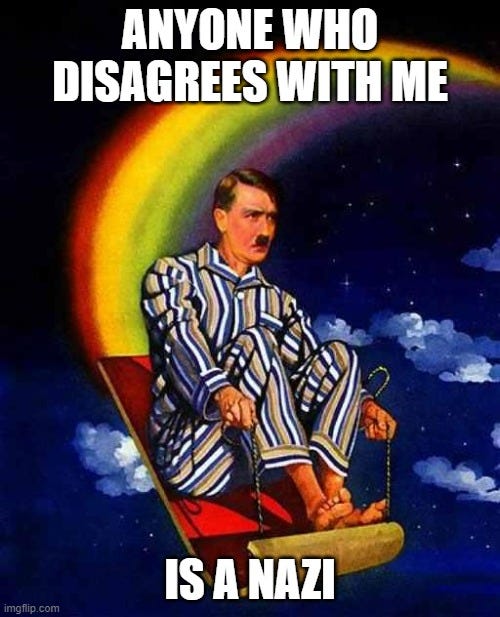
In this case, the apparent association fallacy which Scholz and many others advance seems to rest on the premise that because the AfD seeks to regulate immigration, reduce the influence of Islam in German society, promote law & order, and uphold traditional German social values, they are Nazis. It appears that this vilification of the AfD as "Nazis" is an attempt to evade reckoning with why the AfD's policies are increasingly resonating with German voters. It is worth noting that the Biden administration and the Harris campaign frequently employed similar rhetoric during the months preceding the 2020 U.S. Presidential elections, and it does not seem to have worked in their favor. Indeed, given the AfD's electoral gains and the broader European political landscape, the overuse of this label could backfire, further alienating disillusioned voters rather than persuading them.
The AfD, formed in 2013, has never been part of a governing coalition and has had minimal influence on national policy. It is not the AfD that left Germany strategically vulnerable by dismantling its military, deepening its reliance on Russian energy, or neglecting the realities of mass migration. These were deliberate policy choices made by the governing coalitions of the past 30 years—coalitions dominated by the CDU/CSU and the SPD. Rather than acknowledging any mistakes, Scholz appears to be doubling down on evading accountability, persisting in logically fallacious and moral authoritarian dismissal of political opposition, and hoping this strategy works in the election on 23 Feb 2025. In sum, the very leaders who created Germany's precarious situation are now attempting to shield themselves from scrutiny by arguing that their opposition is completely unworthy of meaningful dialogue, much less running as a democratically elected party. However, the emerging realities of the German electorate suggest that this is an act of desperation by the Scholz regime, which may not achieve much and may actually strengthen the AfD.
Recent opinion polls indicate that the Alternative for Germany (AfD) party has garnered significant support among the German electorate. As of February 2025, the AfD is polling at approximately 22%, positioning it as the second-largest party behind the CDU/CSU, which stands at 30%.
In the 2024 European Parliament elections, the AfD secured 15.9% of the vote, an increase of nearly five percentage points from the 2019 elections, making it the second-largest German party in the European Parliament.
Regionally, the AfD has demonstrated notable strength, particularly in former East German states. In September 2024, the party achieved a historic victory in Thuringia, obtaining 32.8% of the vote and becoming the largest party in the state parliament.
These developments underscore the AfD's growing influence and the substantial portion of the German electorate that supports its platform. If the AfD is truly as dangerous as Scholz claims, then the issue extends far beyond the party itself—it implicates sizeable fractions of the German electorate. If millions of Germans are turning to a so-called "Nazi" party, then Scholz's problem is not with the AfD but with the people he claims to represent.
I do not believe this attribution of "rising Nazism" in Germany to be factual (though I am, of course, open to well-founded evidence one way or the other), and I doubt Scholz does either. His rhetoric exemplifies the moral authoritarian emotional manipulation that has become far too common among political parties in the West, particularly those who frame opposition to "right-wing extremism" as an existential moral struggle. While I am not an expert in German politics, my hunch is that the vast majority of popular support for the AfD relates to their domestic policies on border control, immigration reform, law and order, energy independence, lower taxes, and opposition to moral authoritarianism that seeks to impose new ideological norms into German social life.
Certainly, the AfD's explicitly nationalist and vaguely ethnocentric tone may be a central reason they appeal to some German voters. But let's be honest: a portion of German voters are likely attracted to the SPD or CDU/CSU because those parties promote moral authoritarianism in the form of absolutist cultural relativism, as well as statist, collectivist wealth redistribution that resembles communism—benefiting an elite ruling caste more than the general population. If the AfD's nationalist tone warrants calling them "Nazis," then the SPD’s socialist tone should similarly warrant labeling them "Communists." This type of discourse is reductive and ultimately counterproductive.
When Scholz claims the AfD has "National Socialist roots that trace back to the horrors of Dachau," I do not believe he seriously thinks his assertion is accurate, nor do most people. These attributions of Nazism appear to be part of a suppression strategy—seeking to ban or legally restrict the AfD, shame their supporters, and avoid any meaningful engagement with their primary domestic policy initiatives rather than addressing voters' grievances.
As an outside observer of German affairs, my primary concern with the AfD is their apparent willingness to allow Russia to go unpunished for its crimes against Ukraine and to re-normalize trade with Russia. However, I doubt the CDU/CSU and SPD are significantly different in this regard. Given how slow and incomplete Germany's break with Russia has been—and the fact that Germany continues to do direct business with Russia, not to mention indirect exchanges via intermediaries like Kazakhstan—the AfD's "pro-Putin" stance may simply be a more explicit version of Germany's longstanding tendency toward appeasement of Russia.
If there is real proof that the AfD seeks to advocate dehumanizing, ethnocentric, unjust, violent, or illegal policies similar to those of the Nazi regime, I am open to reviewing it. However, I have yet to see anything from the AfD that suggests this attribution is accurate, nor have I encountered substantive references to empirical evidence from their political opponents.
This pattern is not unique to Germany. Across the West, elites confronted with the failures of their own policies have chosen to brand dissenters as extremists rather than address the structural causes of public discontent. Instead of acknowledging that their choices have led to declining security, economic instability, and eroding public trust, they double down on the very policies that created the crisis in the first place.
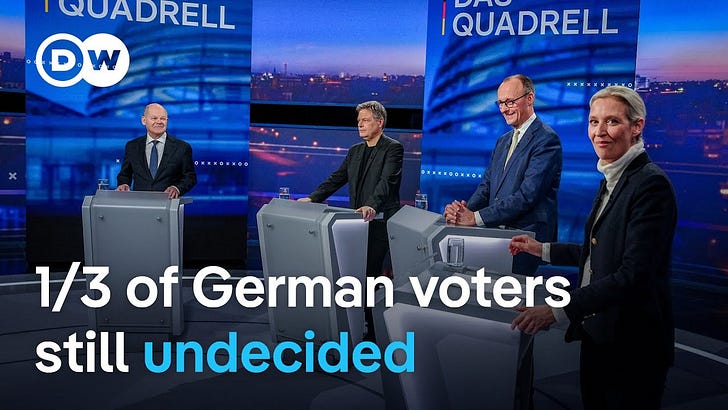
Germany's national security predicament is a prime example. With the Trump administration increasingly signaling a shift in its global commitments, Germany now faces the real possibility of being left to defend itself. Scholz's response? I addressed these themes in a recent essay on Substack:
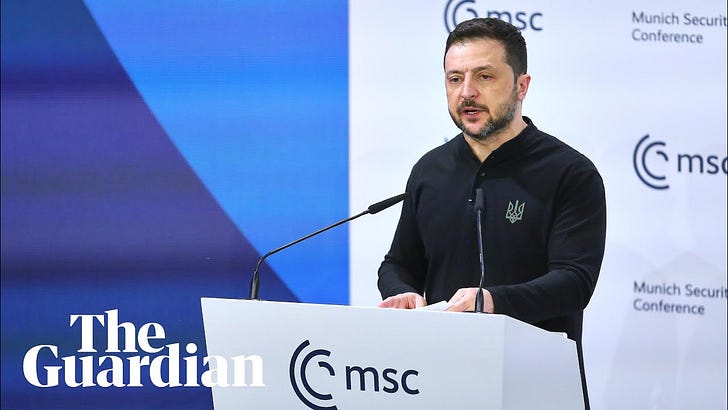
Zelenskyy's call for a European Army is, in many ways, a call for Europe to undergo a deep cultural transformation—one in which national security is treated as a primary rather than secondary concern. I explored this topic in another recent Substack essay:
The reaction by Germany’s ruling elites to both the AfD and figures like J.D. Vance suggests that they are unwilling to engage in genuine course correction. They would rather moralize about democracy than take the steps necessary to preserve it. If Germany truly wants to defend its democracy, it must begin by respecting the choices of its own electorate and confronting the realities that have driven its people toward political alternatives.
Germany is indeed at a crossroads. Will its leaders acknowledge the failures that have led them here—or will they continue down a path of denial, rhetorical deflection, and suppression of dissent, even as their strategic position continues to erode?